Wednesday, 31 July 2013

The New Vancouver Convention Centre

The Vancouver Convention Centre West


The beautiful new expansion to the Vancouver Convention Centre certainly is a representation of the city and its values. Aspiring to be one of the "greenest" cities in the world, Vancouver's new convention centre certainly aids in that respect. The addition has added 220,500 square feet (20,490 m2) of convention space, 90,000 square feet (8,400 m2) of retail space and in total as a project 14 acres (57,000 m2) of land and 8 acres (32,000 m2) over water. In times past, an expansion of this size would signify major environmental impact, however the determination and dedication of all those involved ensured the project meet LEED Platinum standards, the highest achievement from LEED (Leadership in Energy and Environmental Design). Opened on April 4, 2009 the expansion tripled the capacity of the convention centre which fit well for the 2010 Winter Olympic and Paralympic Games as it hosted the International Broadcasters during that time. To date the events held have ranged from the XI International Conference on AIDS, hosting 15,000 delegates (its largest event) to a small meeting between Boris Yeltsin and Bill Clinton. While the convention centre provides large economic benefits to Vancouver by grossing $215 million in revenue, its significance as a landmark of Vancouver stretch more to the architecture and how it truly represents the city.

Thursday, 4 July 2013

Dr. Sun Yat-Sen Classical Chinese Garden

As we all know, Vancouver is a city that is full of diversity. The Dr Sun Yat-Sen Garden Society was incorporated in 1981 as a non-profit organization established to maintain and enhance the bridge of understanding between Chinese and Western Cultures, promoting Chinese culture generally and be an integral part of the local community.

Thursday, 27 June 2013

Vancouver Aquarium


Canada's largest aquarium is the Vancouver Aquarium. It has 70,000 animals with 150 aquatic displays. The facility specializes in Marine preservation and conservation.

The Vancouver Public Aquarium Association was formed in 1950 by UBC fisheries and oceanography professors Murray Newman. The Vancouver Aquarium was the first aquarium in the world to capture and display an orca. The orca in British Columbia is legendary and dates back to the ancient native's who roamed these lands centuries ago. The Vancouver Aquarium operates a Marine Mammal Rescue program which is aimed at rescuing and rehabilitating marine mammals that are found injured, ill, or abandoned, until they can be re-released into their natural habitats Preserving wild-life in British Columbia is what has made this province famous and has attracted tourists from around the world. Two hundred years ago, the waters that suround vancouver flourished whales - today thanks to organizations like the Vancouver Aquarium they are trying to keep this tradition alive, so future generations can see Vancouver in its natural beauty. This landmark is an example of the way Vancouver citizens want to preserve the tradition of the Orca and its accompanied marine wildlife that live of British Columbia.

The Aquariums indoor display marine life from the Georgia Strait and from other coastal areas of BC. They have sharks and sea turtles as well as fish from the Amazon Rainforest.

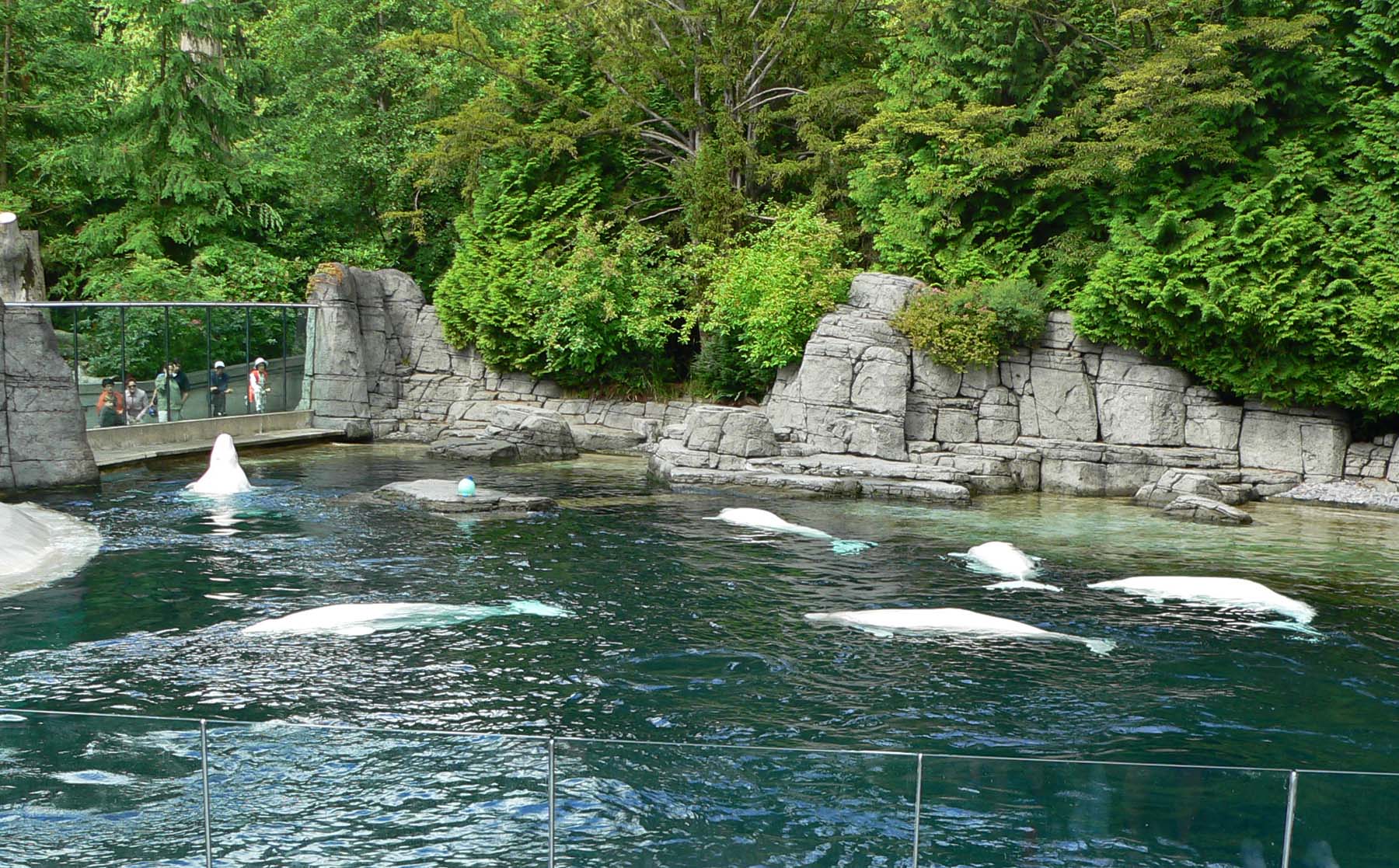
The outdoor display has Beluga whales, dolphins, sea lions, and sea otters. The tanks have indoor viewing windows to see the animals up close. The aquarium also display's South African penguins

The Vancouver Aquarium is located in Stanley Park.

Capilano Suspension Bridge


The famous Capilano Suspension Bridge is located at Capilano Suspension Bridge Park in North Vancouver. The park also has many other outdoor activities.

The bridge was originally built in 1889 by George Grant Mackay, a Scottish civil engineer. It was originally made of hemp ropes, and was replaced with a wire cable bridge in 1903. In 1910 Edward Mahon purchased the bridge, then in 1935 MacEachran purchased the bridge and invited local natives to place their totem poles in the park. It felt necessary to add some kind of native heritage to the bridge as it was lacking a personality. But the bridge formed its own identity throughout the 100+ years of its existence, it is now part of Vancouver's heritage.

The Capilano Suspension Bridge has been visited by people since 1889. Suspended 230 feet (70 metres) above the Capilano River, the Bridge spans 450 feet (137 metres) across. Below the bridge is a canyon. Crossing the bridge is scary as your feel the bridge sway left and right.

Capilano Suspension Bridge Park is an amusement park. You can view the rainforest via Treetops Adventures or venture into the Cliffwalk, a 700-foot long (213 metres), 300-foot high (91 metres) walkway anchored and suspended above the river.

The bridge is located at 3735 Capilano Road in North Vancouver. There are free shuttles that will take you to the Park from Canada Place.

Science World


One of Vancouver's best museum for children is Science World. It is a non-profit organization dedicated to teaching kids about science and technology through interactive exhibits and displays.   It is located at the end of False Creek. The building's official name is Telus World of Science but it use to be called just Science World. The building's name change to the Telus World of Science became official on July 20, 2005 mainly because Telus donated $9-million to the museum. Prior to being called Science World it was called Expo Centre during Expo86.

Before Science World, there was an organization run by Barbara Brink was called  Arts, Sciences & Technology Centre in downtown in the early 1980's which displayed exhibits and served as an outreach program for the community. When Vancouver was awarded to 1986 World's Fair (Expo 86), a dome was designed to serve as the fair's Expo Centre with construction beginning in 1984 and being completed by early 1985. After Expo86, lobbying and fundraising was done to keep the dome and convert it into a science museum. Locals and municipality agreed that "Arts, Science & Technology" centre be transferred into Science World. The Dome had a lot of community support and they added the OMNIMAX theatre shortly after. Science world opened in 1988 after being renovated from the 1986 Expo.

A massive fund-raising campaign ensued, with donations from the federal, provincial, and the private sector contributing $19.1 million to build an addition to the Expo Centre, redesign the interior and construct exhibits. Her Majesty Queen Elizabeth II dedicated the Expo Centre as “Science World. A science centre for the people of British Columbia”.

During the 2010 Vancouver Winter Olympics, Science World was transformed into the Russky Dom which showed plans for the 2014 Winter Olympics in Sochi, Russia.

Science World is in many tourist pictures and easily recognized as a landmark for Vancouver.


Stanley Park Totem Poles


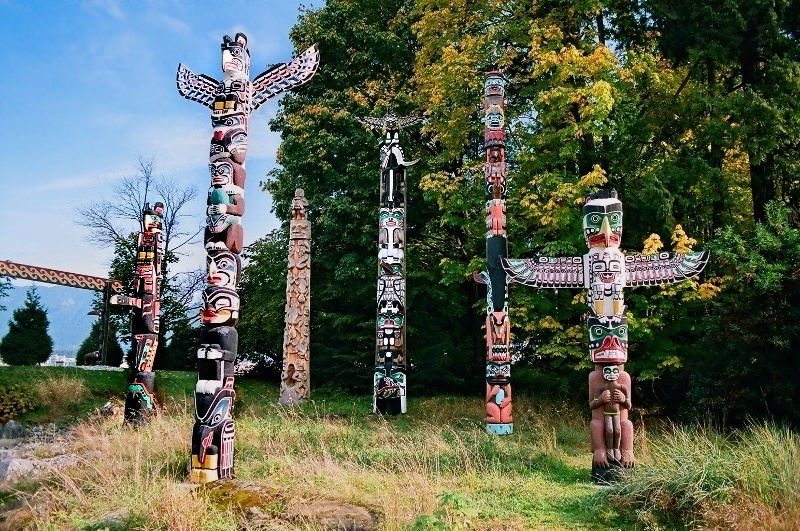
One of Stanley parks most visited places are the totem poles at Brockton Point.

These totem poles were created by BC's first nations people. Four of the original totems were from Alert Bay on Vancouver Island; additional pieces were from the Queen Charlotte Islands and Rivers Inlet on the central coast of BC.

Many of the original totems were carved as early as the 1880s, they have been sent to museums for preservation.

The totem poles are in the eastern corner of Stanley Park. Drivers can find pay parking along Stanley Park Drive, directly in front of the totems. There are usually Stanley Park Shuttles tourists can take.

One of the first totem poles to be positioned was at Lumberman's Arch in the 1920s, when the Park Board bought four totems from Vancouver Island's Alert Bay. Then in the mid 1960s, the totem poles were re-located to Brockton Point.

The Skedans Mortuary Pole is a replica as the original was given back to the owner. In the late 1980s, the remaining totem poles were sent to various museums for preservation.

The final ninth totem pole, carved by Robert Yelton of the Squamish Nation, was added to Brockton Point in 2009. The totem poles are now part of Vancouver's heritage.

Tuesday, 25 June 2013

Vancouver Geography Pt.2: City Heights

Vancouver Geography Pt. 2: City Heights

Other major cities are tall, how does Vancouver stack up?


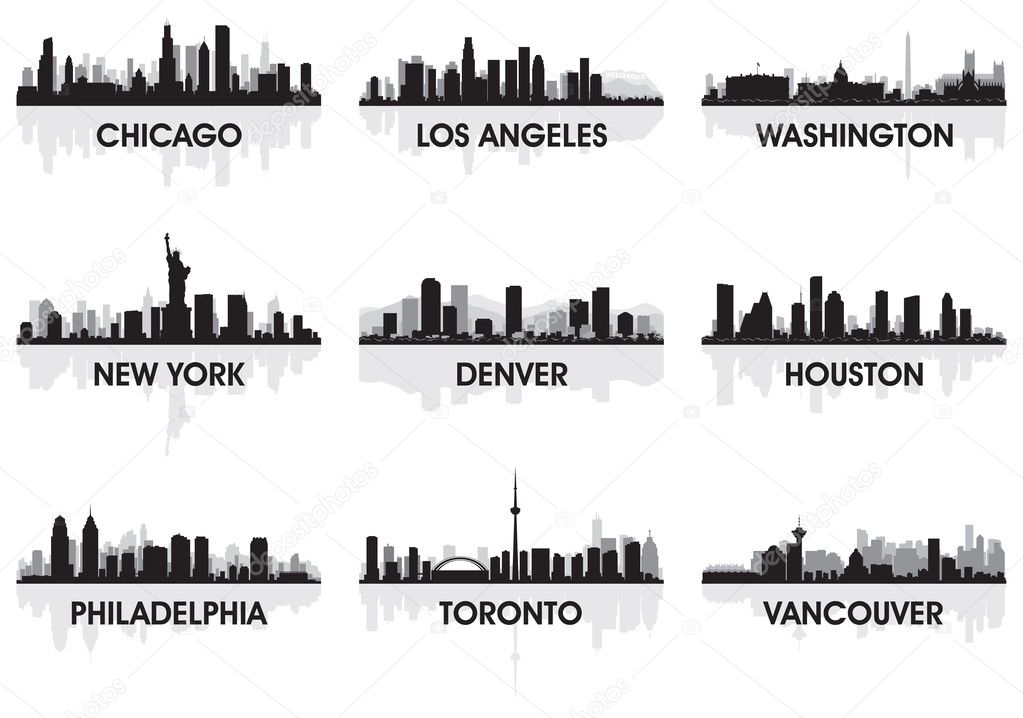
Vancouver, despite being one of the larger cities in North America, does not hold the same pedigree for towers that major cities such as Toronto, Chicago, or Los Angeles. The average height of Toronto's 5 tallest buildings (CN Tower excluded as it is considered a structure, not building) is 885.6 feet, Chicago tallest buildings average 1,222 feet, and Los Angeles averages 822 feet. The average height of Vancouver's 5 tallest towers, with the Living Shangri-la standing the tallest at 659 feet, averages a measly 527.6 feet.  New York City, which actually has much in common with Vancouver geographically, boasts an impressive 1263.6 average. So why does a world class city like Vancouver fail to reach the heights of other major cities?